
We are more likely to accept that we should cut back on travelling in petrol and diesel vehicles if we know how much these vehicles contribute to air pollution and seriously damage our health.
MP Smarter Travel has been working with councils across London and beyond to increase awareness of air pollution.
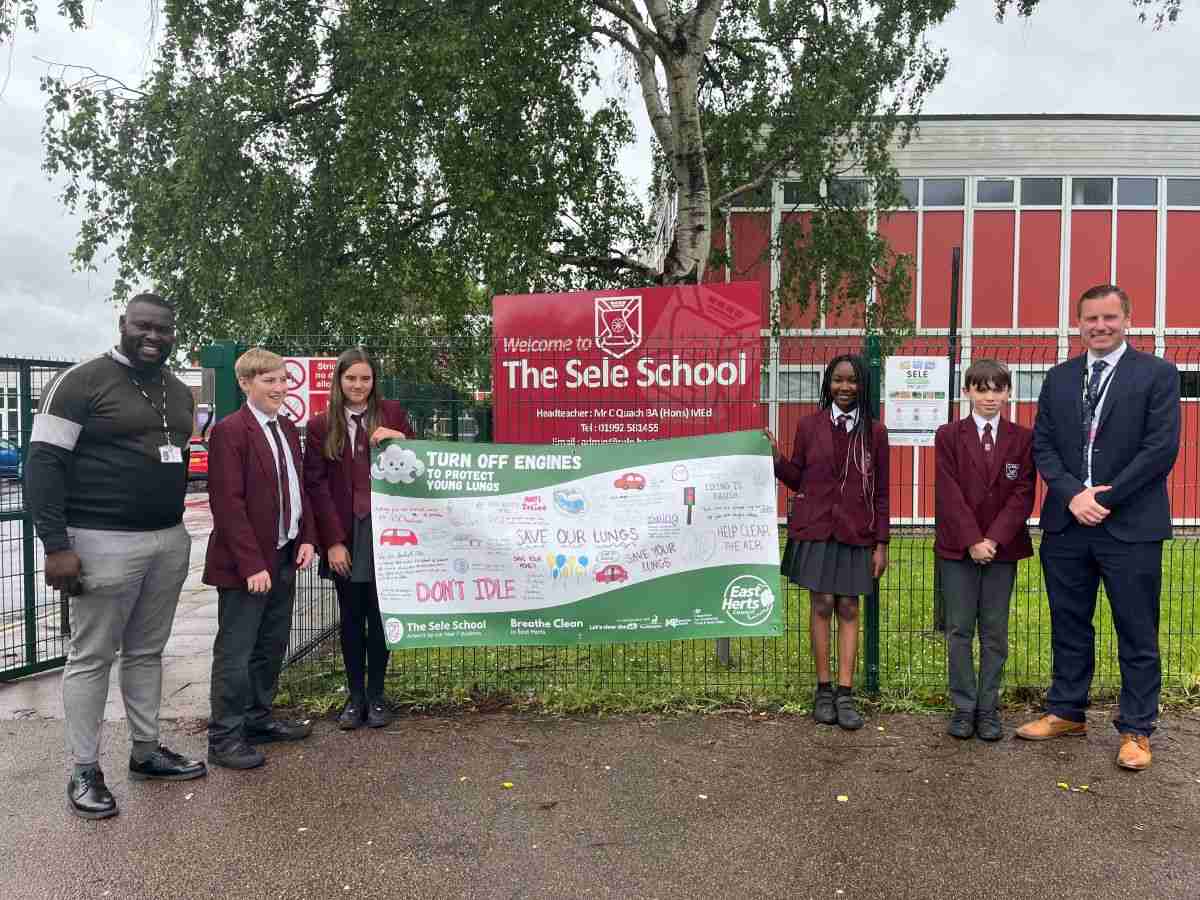
Our team continues to deliver air quality projects and workshops to hundreds of schools. We also support schools to deliver anti-idling campaigns. These campaigns include air quality testing and designing bespoke healthy walking maps which can help the students make informed choices about how they travel and the route they take.
We have also delivered our workshops to businesses such as Waitrose and Gu.
Here, one of our consultants, Alice Peers, looks at how air pollution education for all age groups plays a critical role in improving air quality and changing the way we travel.

Air pollution is contamination of the indoor or outdoor environment by any chemical, physical or biological agent that modifies the natural characteristics of the atmosphere. Household combustion devices, motor vehicles, industrial facilities and forest fires are common sources of air pollution.
World Health Organisation
The World Health Organisation (WHO) tells us that 99% of the world’s population lives in places where air pollution levels exceed WHO guideline limits.
Air pollution is an equity issue
Looking at the UK specifically, Friends of the Earth analysis shows that where you live and your household income make a significant difference to the levels of air pollution you are exposed to. Air pollution has a disproportionately high impact on lower income households particularly from deprived areas. This is because they are more likely to have existing medical conditions and live in areas with poorer outdoor and indoor air quality. Minority populations also bear the burden of air pollution.
Children among most vulnerable to pollution
It is important to recognise that children are among the most vulnerable when it comes to air pollution. It can be detrimental to brain and lung development and as their lungs and brains are not fully developed, they are left more exposed to the negative health impacts of traffic fumes and particulate matter 2.5 (PM2.5). Added to this, children are more likely to breathe in polluted air due to their higher breathing rate compared with adults and their proximity to car exhausts.
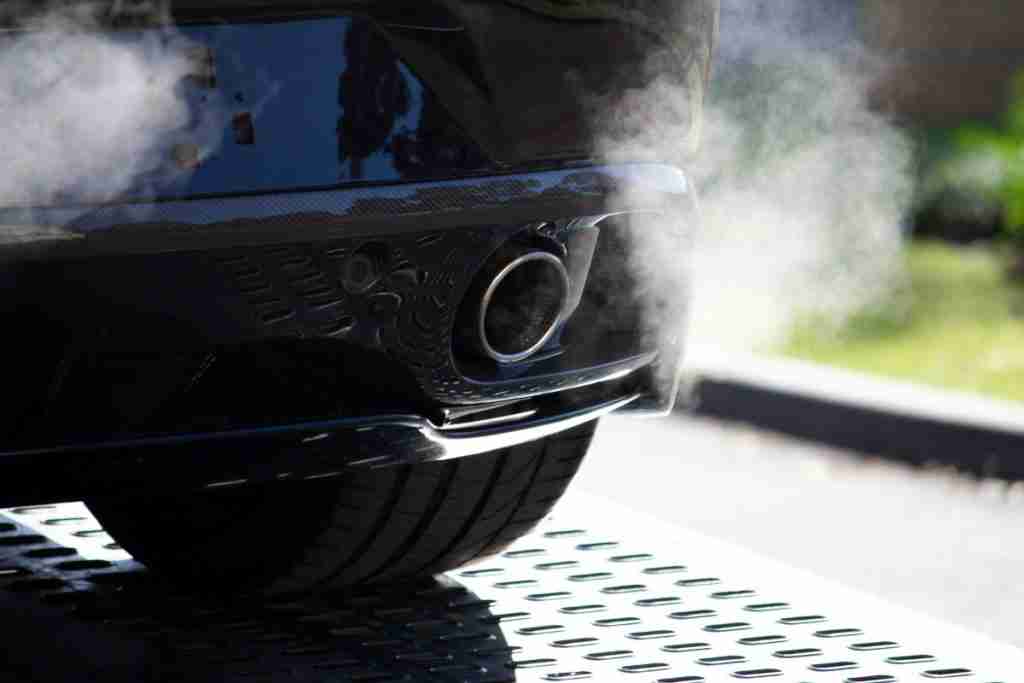
All this puts them at risk of respiratory health issues such as developing asthma, infections such as pneumonia and lung cancer in later life.
Particles shed from tyres during braking, among most dangerous pollutants
The largest contributors to air pollution vary by location. In urban areas, cars dominate in producing high levels of air pollution.
Traffic is cited as being a significant threat to clean air in the UK. In London, traffic is the cause of most of the city’s air pollution. And it’s not only tailpipe emissions. Pollution from tyre wear presents a significant threat to the health of the environment and to us. At the moment, it is unregulated.
Non-exhaust emissions have increased by 18 per cent for PM2.5…between 1996 and 2023, in part due to the rise in distance travelled by vehicles each year and the trend towards heavier vehicles.
Department for Environment & Rural Affairs
The UK government set a new target in 2023 to reduce the population’s exposure to PM2.5 by 35% compared with 2018 by the year 2040. The aim of this measure is to improve air quality, resulting in better public health.
Campaign organisations and professional bodies, including The Royal College of Paediatrics and Child Health, have reported their disappointment with the government’s target, saying it could be more ambitious with air pollution, estimated to be responsible for 28,000–36,000 premature deaths a year in the UK.
Need for better public understanding of air pollution
A significant lack of public understanding about the negative impacts of air pollution persists. Better education and communication of the facts would help with increasing public support for air quality initiatives.
Local authorities working to clean up our air
Many local and regional authorities are taking steps to reduce air pollution. Examples include the implementation of Low Traffic Neighbourhoods, low emissions zones and higher parking costs.
School Streets, which restrict traffic flow around school locations at drop-off and pick-up times, are also becoming more popular in London and other urban areas.
Data from London’s Ultra Low Emissions Zone shows that this intervention by the Mayor of London is helping to reduce Nitrogen Dioxide (NO2) emissions and other harmful pollutants.
Raising public awareness
Increasing awareness of air pollution plays a key role in increasing individuals’ sensitivity to the topic and encouraging positive behaviour change towards low pollution alternatives.
Educating the public can lead to more informed decisions regarding air pollution.
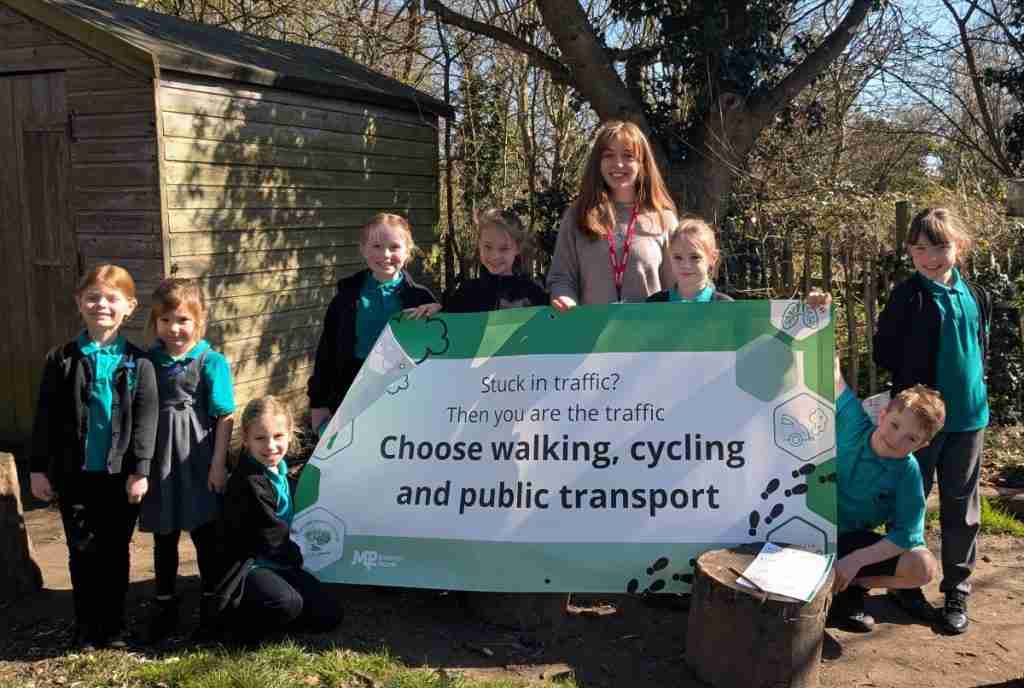
Educating children is particularly important as they have the power to influence their parents and develop healthy active travel habits from an early age. This includes decisions about their own behaviour which directly affects their health as wellbeing.
Education also plays a key role in gaining more public support for air pollution reduction schemes and is vital in driving further policy change that makes travelling by public transport, walking or cycling the easy and convenient ways to get around.
Persistent high levels of air pollution across the UK highlight the importance of ongoing air pollution reduction schemes.
Our work
Our school engagement projects aim to increase communities’ understanding of air pollution.
We deliver air quality workshops in schools across London and England teaching children about the dangers of air pollution.
These workshops include running air quality experiments with students, making promotional banners, anti-idling campaigns, walking maps and delivering assemblies.
Learning about air pollution in school
The air quality experiments are a great way to help the children understand the air pollution levels where they live and go to school. We discuss the outcomes with them and the actions they can take to improve their local air quality.
Walking maps
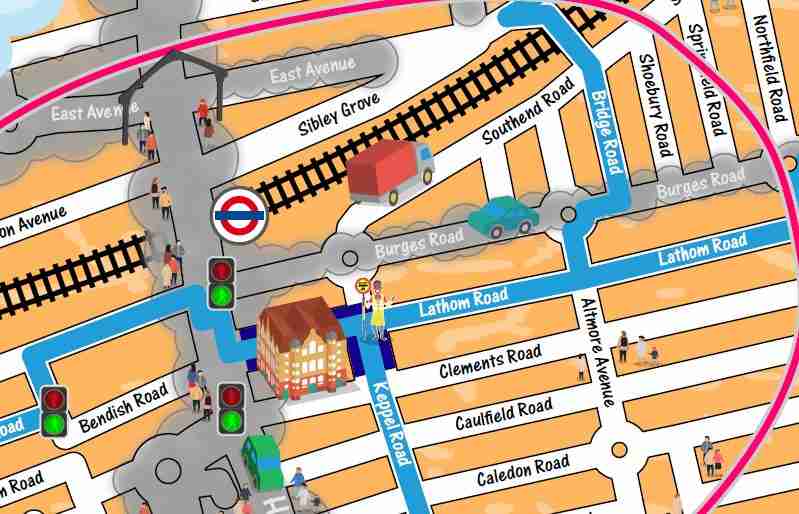
We create co-designed air quality action banners and local walking maps which are great way to share knowledge with the wider community about air pollution and how to minimise it.
Using student designs as inspiration, we create bespoke maps highlighting the least polluted routes in the borough where it’s best to walk and cycle.
In providing these maps’ we help students to put what they have learned into action and choose low pollution routes to travel around their area.
Anti-idling campaigns
We also support schools with their anti-idling campaigns. The children talk to drivers near their school, who are sitting in their car with the engine running.
They tell them about the negative impacts of engine idling on the quality of the air around their school.
The anti-idling message delivered by local school children is powerful and encourages drivers to switch off their engines.
Research from NICE suggests that “no idling” zones help protect vulnerable people from air pollution.
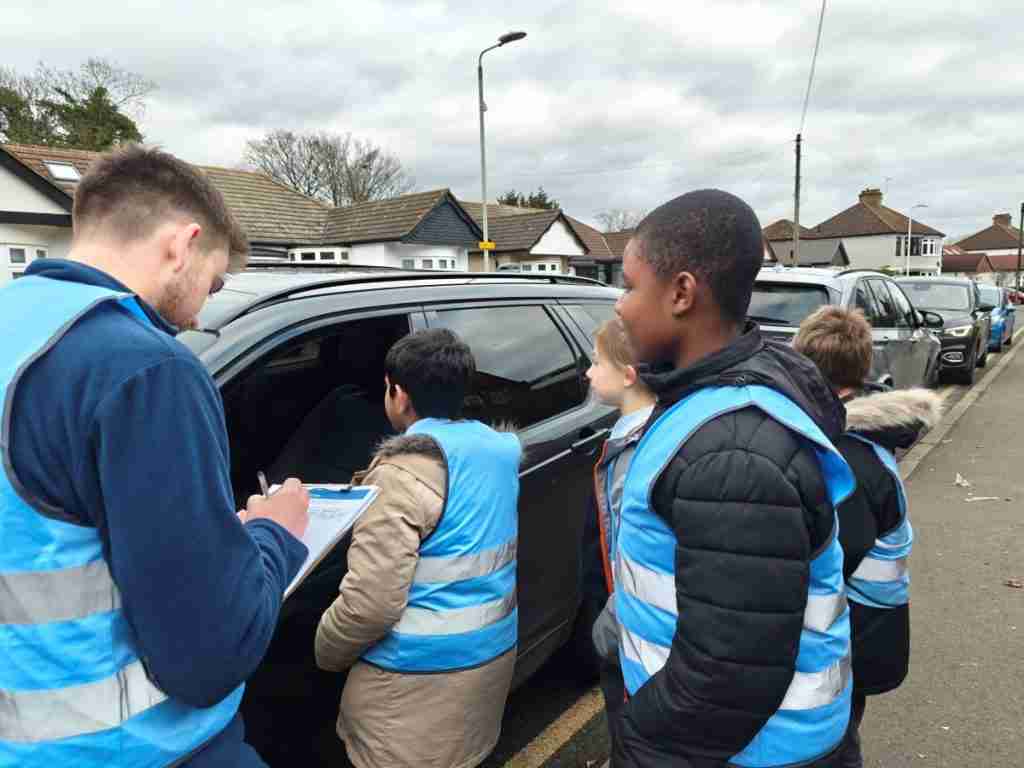
Once again, it’s important that people know this so they appreciate that the simple act of switching off your car engine while you wait can have a positive impact on the health of communities.
Thank you for the assembly and all these fantastic resources to share with children and their families.
PSHE (Personal, Social, Health and Economic) and wellbeing lead, Oliver Goldsmith Primary School, on our Brent Walking Maps project
Walking and bike buses
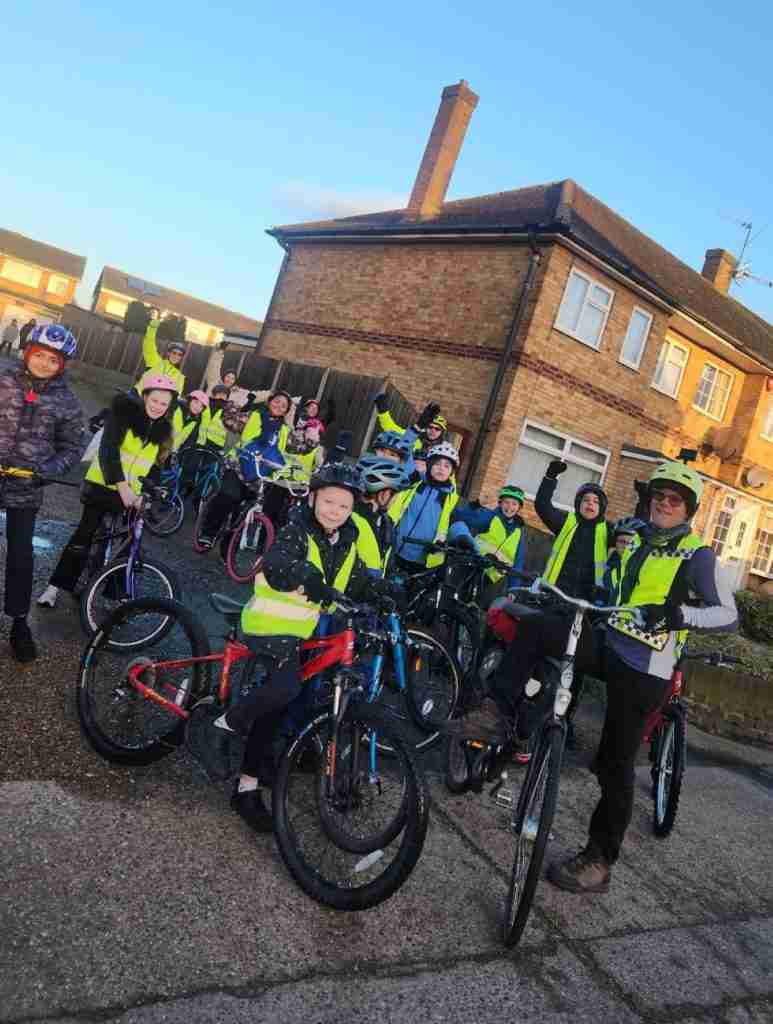
Another major part of our air quality work in schools is organising and managing walking and bike buses. Children get the opportunity to walk or cycle together to school with many enjoying travelling with their friends.
Creating a safe way to get to school without a car plays its part in helping families choose the healthy and more active travel options, swapping fossil-fuelled journeys for walking, scooting and cycling.
We can all make a difference
Education at all levels and at all stages in life helps many of us to make a shift in our everyday behaviours. Travelling more actively, switching off the engine while we wait, taking a less polluted route home all make a difference to our health and environment.
Contact us
Get in touch if you would like us to deliver air quality workshops in your school or workplace: info@mpsmartertravel.co.uk
We would love to hear from you.