
Geographic Information Systems to support sustainable transport solutions
Sustainable transport solutions are essential for building stronger, more connected communities. At MP Smarter Travel, we support our clients navigate the complexities of transport planning by using Geographic Information Systems (GIS).

With GIS, we can map, analyse, and visualise data in ways that provide actionable insights to improve mobility and accessibility. By combining science, lived experience, and data, we enable our clients to make smarter decisions.
I’m Annie Garrood and I lead our GIS data analysis and visualisation work here at MP Smarter Travel. My team works with councils and businesses across the UK to provide data-driven insights to inform and underpin sustainable travel strategies. Using GIS, we take complex data and turn it into clear insights, helping local authorities, schools, and businesses plan for a more connected and active future.
The power of GIS in Transport Planning
At MP Smarter Travel we empower local councils, businesses and schools by harnessing the power of GIS. This powerful data tool transforms complex data into strategic, high quality maps, enabling smarter decision-making and more efficient planning for our town centres.
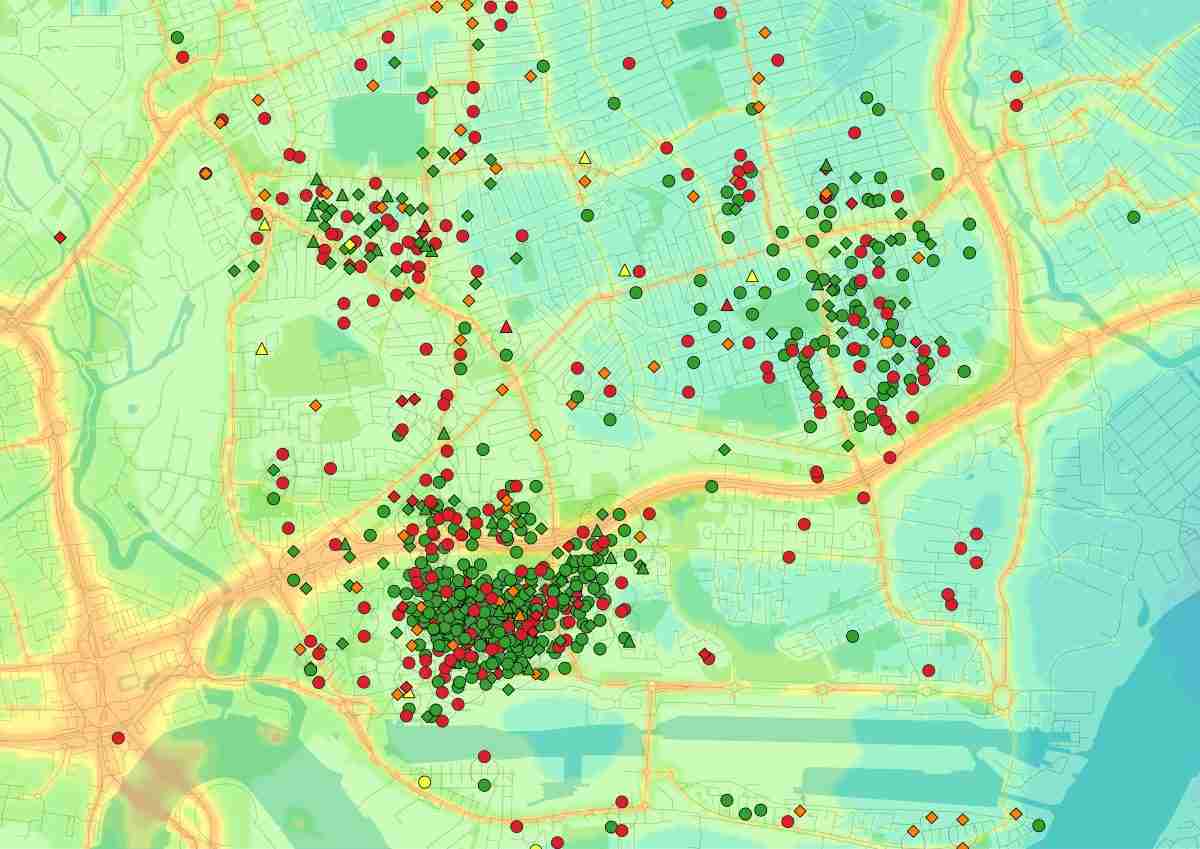
Video example of data sets being added to a map to show the mode of travel children take to school from certain post codes. This is underlaid with London Atmospheric Emissions Inventory (LAEI) air quality data. Contains OS data © Crown copyright and database right 2022, LAEI 2019
Patterns and trends
Spatial analysis allows us to see patterns and trends that might not be immediately obvious from traditional data sets, such as excel spreadsheets. GIS enables us to overlay multiple data sets such as traffic flow, public transport routes, modal filters, cycling infrastructure, and air quality, onto a single interactive map.
This helps local councils identify problem areas, plan improvements, and monitor the effectiveness of implemented changes in terms of the people’s travel behaviour over time.
Travel planning
Traffic congestion around schools is a common challenge, especially during drop-off and pick-up times. At MP Smarter Travel, we use GIS to analyse student postcode data, helping us identify travel patterns and pinpoint car hotspot areas. This detailed analysis allows us to develop targeted strategies that reduce car dependency and encourage more sustainable transport choices, such as:
- Creating safer walking and cycling routes to make active travel a more viable option for students
- Identifying convenient park-and-stride locations that allow parents to park further away and walk the rest of the way
- Promoting car-sharing initiatives to reduce the number of vehicles on the road during peak times.
Working with schools
By mapping student travel behaviours alongside the availability of infrastructure, we work closely with councils and schools to implement tailored solutions that tackle congestion and make greener travel options more accessible.
This not only helps ease traffic but also contributes to a healthier, more sustainable environment for students and the wider community.
Working with businesses
We work with businesses and councils to develop effective travel plans for employees. Through large-scale surveys, we gather data on employee travel patterns, preferences, and barriers to sustainable commuting. Our GIS analysis helps identify opportunities to reduce car use and improve travel options, such as better cycle routes, enhanced public transport access, and flexible working arrangements.
By providing actionable insights, we help businesses create more efficient, sustainable travel initiatives that benefit both employees and the environment.
Solving freight and logistics issues
Traffic congestion, especially from freight vehicles, can create major challenges in urban areas.
By using GIS-based spatial analysis, we’re able to dig deep into travel and freight patterns. Whether it’s assessing delivery schedules, understanding the impact of pedestrianisation or evaluating waste management needs, our analysis pinpoints which businesses are most affected by changes.
We also take a close look at postcode data and carry out in-person engagement to uncover travel behaviours and help determine the viability of projects and understand public opinion. By mapping key factors like air pollution, traffic flow, and public transport access, we’re able to offer valuable insights that not only improve logistics but also help create greener, more efficient urban environments for everyone.
Contact us
We would love to hear from boroughs, businesses, and highway authorities across the UK who are interested in using GIS to gain data-driven and actionable insights to solving transport related challenges.
Get in touch at info@mpsmartertravel.co.uk to talk with us about your mapping and data needs and find out how we can help.