
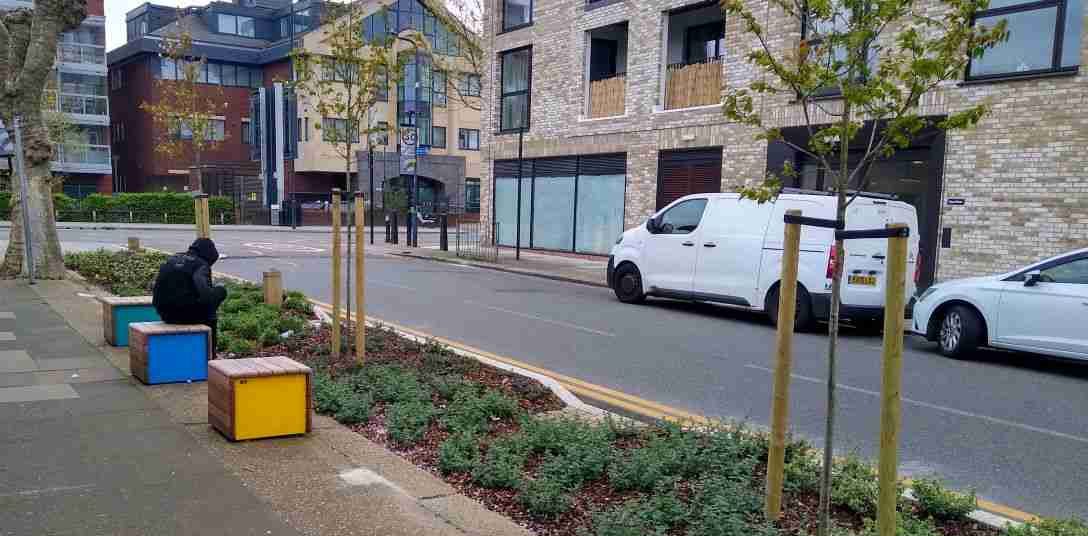
- Creating beautiful places for communities to enjoy
- Providing safer walking, wheeling and cycling environments
- Collaborating with the community
- Giving something back
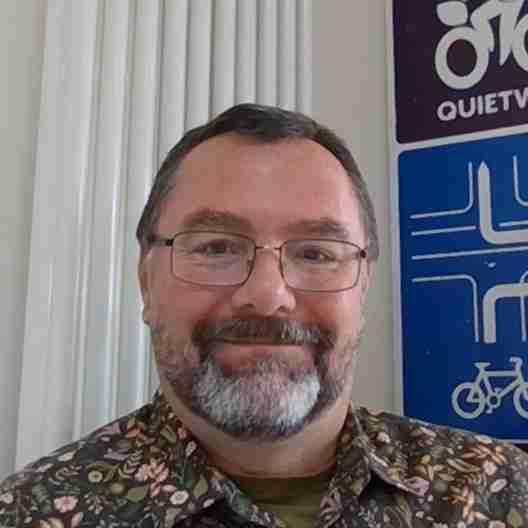
Designing streets in London always has its challenges. For many of our projects we are fortunate to work in partnership with professionals in a variety of fields. Civil engineer, Mark Philpotts, also known as the legendary Ranty Highwayman, owns highway engineering and planning consultancy, City Infinity. We work with Mark on our school street design projects.
Here, Mark writes about the challenges of rethinking historic city streets and the importance of collaboration between councils, residents, community organisations and consultants to raise the level of street design ambition so they work well for everyone.
Designing new streets is more than carriageways and footways
It should be easy to build new streets, but we often end up just providing carriageways and footways.
Concentrating on just these two aspects of a street means we are neglecting future generations of residents by not creating streets that are pleasant to spend time in and which feel safe places to walk, wheel and cycle.
We should be designing in infrastructure to support active travel, designing in car parking so it doesn’t become a future problem and designing out future speeding and issues associated with through-traffic.
Stretch the mind and rethink how space is used
Retrofitting existing streets has some commonalities but is far trickier because there will be years of physical and emotional baggage associated with existing places.
There are all sorts of pressures, established ways of using the spaces, and of course both the storage of motor vehicles and people driving through to get elsewhere.
Engineers like to solve problems. That’s why, perhaps, the tricky urban retrofit projects that stretch the mind are, frankly, more fun to deliver.
Compromises can be opportunities
If we’re trying to provide safer walking, wheeling and cycling environments, build sustainable drainage systems (SuDS), manage parking, including cycle parking, and somehow keep general traffic moving, there will be trade-offs and compromises.
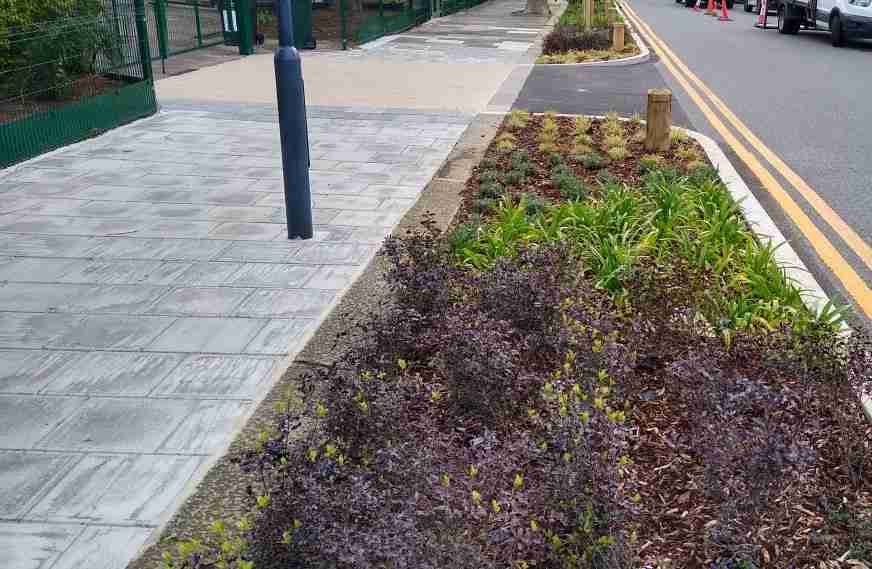
This should be seen as an opportunity. When we start thinking more widely around how the road network should be operating, we almost always find the space we were looking for.
Working in the busy London Borough of Brent
These thoughts have been in my mind working with MP Smarter Travel in delivering a range of projects in the London Borough of Brent. It’s a place with all of the urban challenges for transport, lots of ongoing development work and of course, contested street space.
Take our work supporting the council’s School Streets programme. The School Street concept uses long-available highway powers to create pedestrian and cycle zones in the streets around schools. These zones operate during morning drop-off and afternoon pick-up times.
School Streets exist to create safer spaces approaching the school gate. They also provide much needed walking, wheeling and cycling capacity. Residents living in School Streets and who have permission to drive are expected to behave as guests in the road space, rather than be the dominant road users.
Working in collaboration with the community
At a basic level, there is a need to develop proposals in partnership with officers and schools in a way which brings residents along.
The council often uses the experimental traffic order process which is useful. It supports engagement with a live School Street that is actually up and running. People can try it for size to inform their views about it and the council can make adjustments if required.
School Streets in London tend to be created using a series of traffic signs with camera-enforcement. It gets exciting when we get a chance to activate the spaces that are created through removing the motor traffic.
Transforming traffic-clogged roads into safe, sociable spaces
With MP Smarter Travel leading the engagement and the council investing its Healthy School Streets funding from the Mayor of London in improving areas around schools, we developed concept designs for some of the borough’s School Streets. Through our designs, we wanted to add something extra to the spaces that had once been occupied by school-related traffic and parking.
Putting up cameras and signs restricting traffic could be seen by some people as the council taking something away from the community.
Giving back to the community
Transforming the area around the school from a traffic-clogged road into a place that people can enjoy and appreciate, is vital to giving something positive to the community that can be enjoyed and appreciated by everyone.
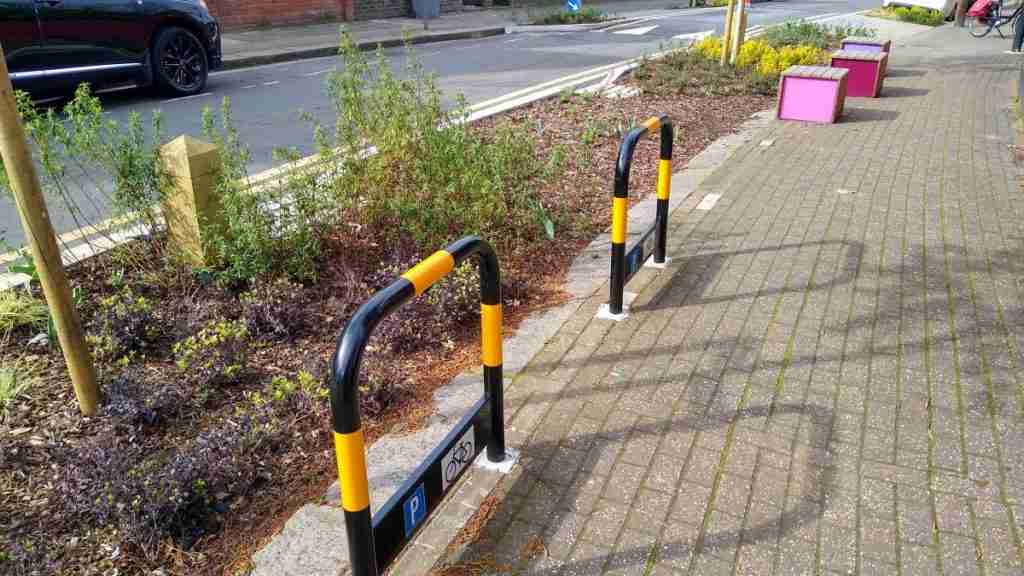
In Brent, our offering came in the form of rain gardens, tree planting, cycle parking for parents and carers, and seating for those waiting for school pick-ups.
Inspiration from school children’s ideas for their School Street
We developed tailored proposals for some of the early batch of school streets. These had been pilot school streets for the council. They then wanted to make them permanent .
We designed something fun for the kerbsides. Something more attractive than asphalt and yellow lines. This was very rewarding work because our designs were in response to the ideas from the school children themselves.
Urban places are under more pressure than ever as populations in our towns and cities grow. Our climate is getting more unpredictable with greater periods of heat and increased risk of flooding.
Densification is a positive in that it brings more people closer to the services and amenities they need. This enables more of us to make our everyday trips using sustainable transport.
Rain gardens and trees cool down our streets in the summer and soak up rainwater, reducing the risk of flooding. They also make our town and city centres more attractive places to spend time, creating opportunity for more sociable and connected communities.
We have to raise our ambition
Collaboration between councils, residents, community organisations, consultants and others is vital to raise the ambition around how streets should function beyond being just transport conduits, because they can and should offer so much more.
It’s much more than just traffic signs and their associated traffic orders taking away unrestricted driving and parking.
It’s up to engineers, politicians and other communicators to delight and inspire residents by highlighting the huge improvements we all stand to gain from beautifully designed public spaces.
Read more from Mark for insight and expertise on ambitious street design and creating inspiring community spaces.
Further reading
European Commission: School Streets for Safe and Sustainable School Trips
Transport for London: School Streets Qualitative Research
Local Government Association: Sustainable Drainage Systems
Clean Cities: City ranking 2025: Streets for kids, cities for all
MP Smarter Travel: Designing streets for accessibility