
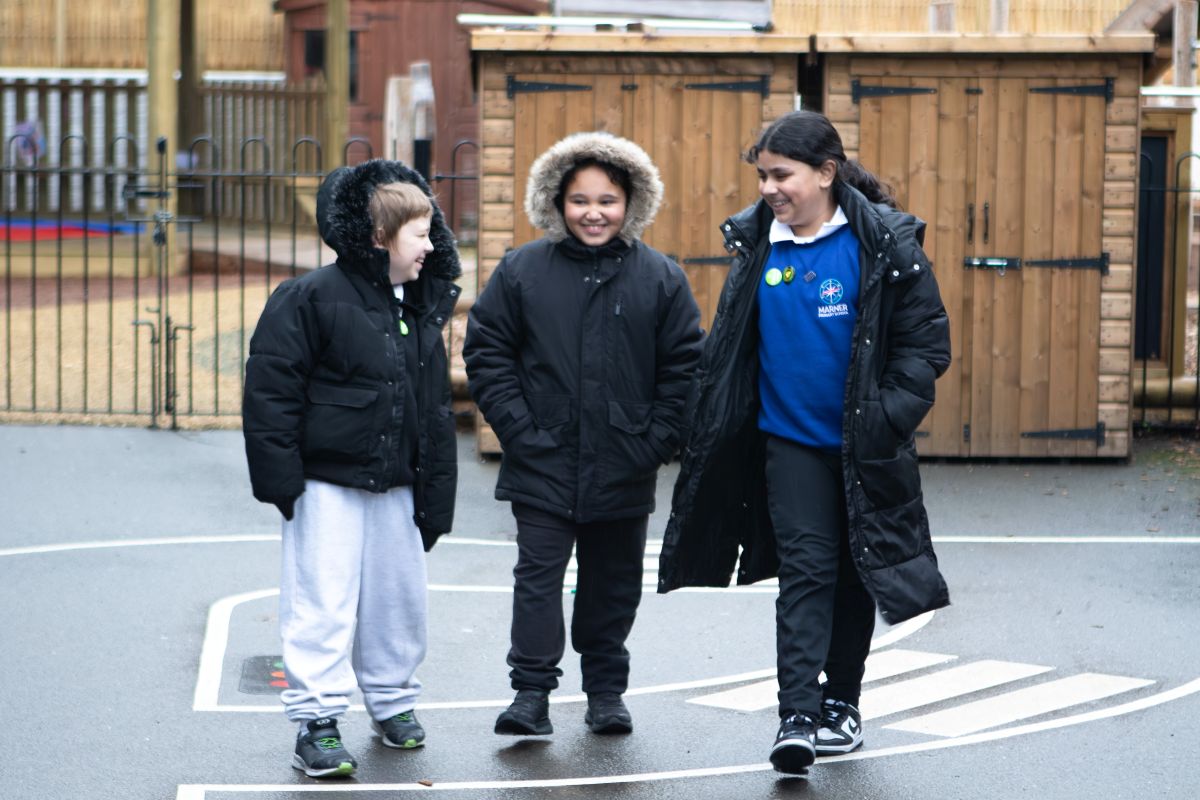
Supporting young people to be more active
Local authorities across the country are increasingly implementing School Street schemes as part of their wider strategies to improve road safety, reduce congestion, enhance local air quality and encourage walking, wheeling, scooting and cycling for the school run.
These schemes are helping to create safer, healthier and happier school communities. Their success relies on strong engagement, effective collaboration with the school and data-driven decision making.
At MP Smarter Travel, we have delivered a number of School Streets engagement projects with a variety of councils and schools in London and the south east.

I’m Alice Chevallier and have worked many School Streets. I have seen the positive impact that they have on young people, their families and the school community as a whole.
Using my experience of delivering School Street engagement projects, I set out here why School Streets are key to improving people’s health, changing the way children travel to school and changing how drivers move through road space where pedestrians, people using mobility aids and cycles are prioritised over motor traffic.
Alice Chevallier
School Streets change the way people travel
A School Street scheme is where movement of motor traffic is temporarily restricted on one or more roads outside a school.
The restrictions are in operation during morning drop-off and afternoon pick-up hours.
Depending on the local authority, Blue Badge holders and people living on the School Street may be exempt.
The School Street is open to people walking, scooting, wheeling and cycling.
School Streets are the first step to seeing less motor traffic outside schools and increasing rates of walking and cycling.
Across Europe and the UK, School Streets have resulted in more children walking and cycling to and from school.
Millions more cars on our streets and fewer children walking to school
In 2015 there were 30.3 million licensed cars in the UK. In 2025 this number rose to 34.49 million.
We have normalised motor traffic and prioritised the movement of cars, vans and lorries above everything and everyone else. Policies, such as School Streets, Low Traffic neighbourhoods, 20mph speed limits, pavement parking enforcement and protected cycle lanes, are being put in place to change this, but there is so much more that needs to be done to make our streets healthier and safer places to be.
Children should feel safe on our streets and especially outside school. They should feel the freedom and positive benefits of getting themselves to school without the need for a car.
The Walk Wheel Cycle Trust’s (formerly known as Sustrans) Children’s Walking and Cycling Index 2024 found that 38% of children across the UK walk, wheel and scoot to and from school. Compare this with 1976, when about 74% of primary school children walked to school. That is a huge decline in the number of children able to get themselves to and from school.
Councils need to take action to enable children and young people to travel independently. A large part of this involves addressing parents’ concerns which would give them confidence to allow their children to take public transport, walk, wheel and cycle their journeys.
Road safety is an issue
Road safety charity, Brake, found that concern about busy roads and fast traffic are the main reasons why many parents don’t allow their children to walk and wheel to school. Sixty-nine percent of parents would like their children to walk and wheel to school and 85% would like the government to do more to make their roads safer.
In London, 72% of people agree there is too much traffic around school. Nationally, 81% of people think this. However, 71% of primary school journeys covering 1-2 miles are made by car (National Travel Survey 2023, DfT).
So there is an action here for government and councils to do more to enable greater numbers of children to travel safely and more actively to school. This is something most parents want. The school journey is a fantastic opportunity for building healthy activity into young people’s lives and to give them a sense of independence.
School Streets are on the rise
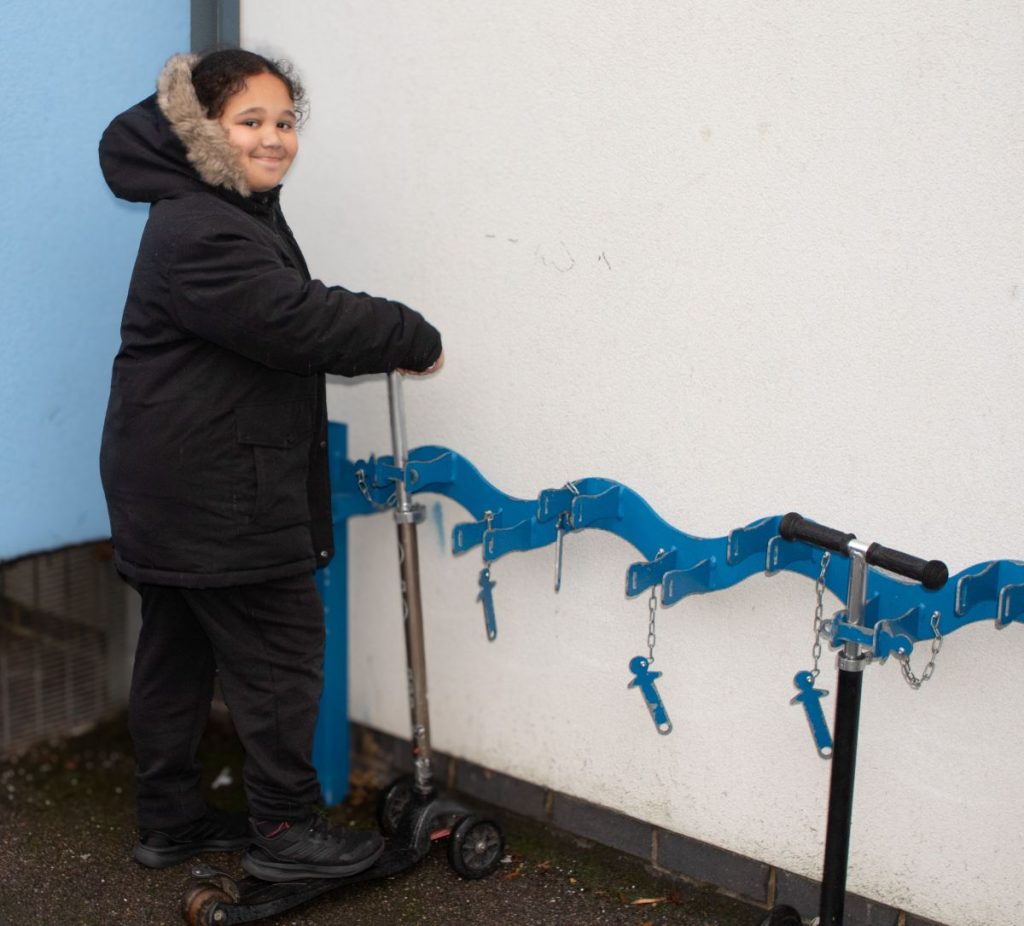
Since the implementation of the first UK School Street in Scotland in 2015 and the first London scheme in Camden in 2017, it is estimated that as of Summer 2025, over 800 School Streets operate across London, with a further 200 schemes across the country.
School Streets have resulted in a huge reduction in cars travelling up and down Dollis Hill Avenue and therefore have made the drop-off and collection of children at school much safer. It also means many more children scoot and cycle to school as the road is so much quieter.
We have been very lucky to have greenery and flowers planted in the area which somehow makes the road feel calmer and safer.
Brent school teacher
No one size fits all
School Streets vary from place to place. The local authority will carry out a feasibility study to assess the types of design that are possible and practical in any specific location. A likely trigger for a feasibility study is when teachers or parents raise concerns with their local authority about road safety and congestion outside their school gates. These concerns may also be raised by residents living in the streets around a school.
For some schemes, the only defining feature is signage at the start of the School Street. This informs drivers of the traffic restrictions in place. Often, ANPR (Automatic Number Plate Recognition) cameras are used alongside the signage. In some cases, volunteers marshal the School Street to ensure it operates effectively and safely.
Reallocating road space
A reduction in motor vehicles can create opportunities to reallocate road space. Things get exciting when budget and location allow more of a redesign or a reimagining of how the street looks and functions. Some schemes incorporate greening and seating. Some also include pencil bollards in the road that provide a level of protection from traffic for pedestrians and people cycling.
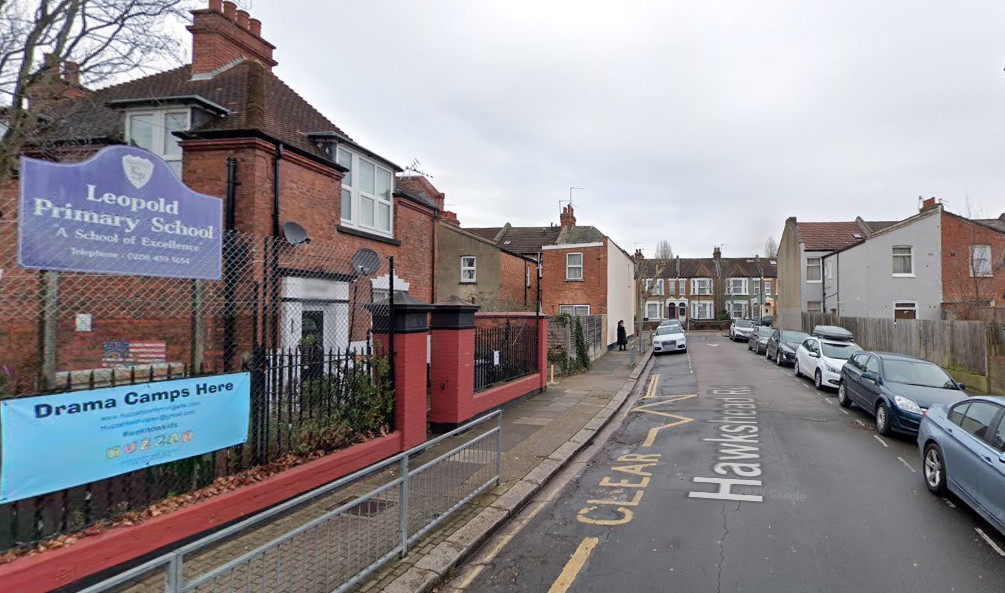
Hawkshead Road outside Leopold Primary School in Church End and Roundwood in Brent is an example of how the kerbside has been opened up by removing a metal barrier and made more attractive and flood resilient using planting.
The MP Smarter Travel team delivered engagement events for Brent Council and worked with a highways engineer to reimagine this street space. Not strictly a School Street, in that there are no traffic restrictions, this a good example of how design can beautify an area while being practical in dissuading pavement parking, creating flood resilience and improving air quality outside a school.
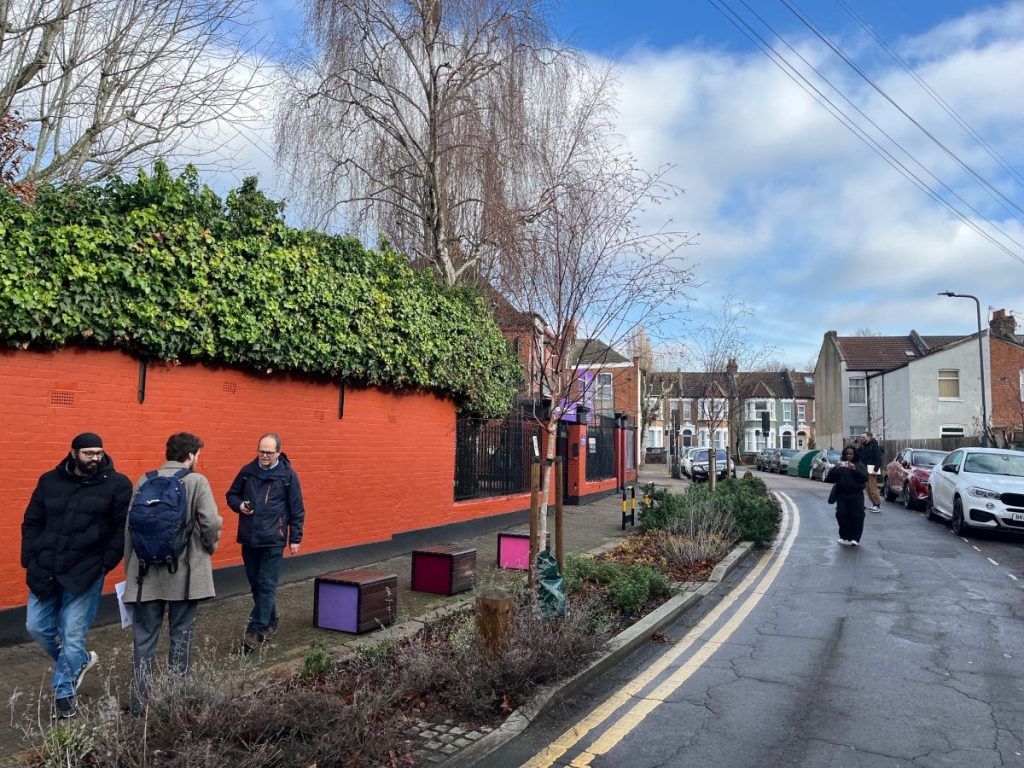
There are great examples of School Streets featuring street art, greening and seating that can be enjoyed by everyone. Some include more parking for bikes, non-standard cycles and cargo bikes. These complementary measures all go towards encouraging and enabling children and their families to change their travel behaviour.
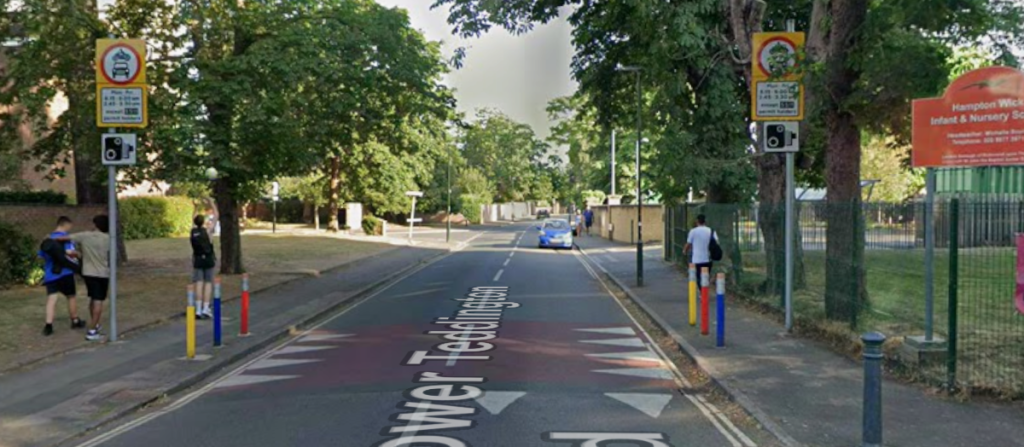
Richmond Council has designed new gateway features for their School Streets to make them more visible and recognisable. Their aim is to minimise people mistakenly driving in the School Street during the times when restrictions are operational. This should drive up compliance and result in fewer people receiving fines.
Public engagement is key to success
Street infrastructure and transport services affect us all. They impact on the way we go about our everyday lives. It’s not surprising that most people have an opinion about the streets they use, especially when a local authority wants to make changes.

Consultation on School Streets is essential to implementing successful and sustainable schemes. Involving residents in how a School Street will look and operate helps with designing a scheme that is more acceptable to a greater number of people and more likely to bring about a positive change in how they travel, how they use their streets and view these public spaces.
Teaching staff are vital in gathering support across the school community and promoting the health and road safety benefits of School Streets to students and families.
Once the school and local authority decide a School Street would benefit children and complete a feasibility study, the next step is to commission street designs and gather public feedback. Residents, parents, children and businesses can then help shape the final design.
People can be involved in the design of a School Street through online surveys, door-knocking and drop-in workshops, where they can speak with council officers and the school community about the proposed changes.
Online surveys can reach a broad audience, while in-person engagement helps ensure the scheme reflects community needs and builds local support. It can also make the process more inclusive when events are held in places people already use, such as the school gate, a community centre or local shops.
Online and in-person engagement work best together. Online consultations allow for bigger reach and face-to-face engagement can mitigate “negative experiences and misunderstandings, particularly when addressing contentious topics”.
It’s good to talk
Sometimes residents living on School Streets or in the vicinity can have negative preconceptions about how it will affect them. Talking to people on the doorstep is a great opportunity to reassure them about the benefits of reduced traffic outside where they live. Many councils also exempt them from the restrictions.
Creating an environment where people can put forward their ideas for a School Street or know that their concerns are being listened to is one way of making it more likely that a street will meet community needs and enjoy public support.
In-person events that I have found to be really effective include school assemblies and workshops. At MP Smarter Travel, we’ve found that students really enjoy conducting Healthy Street Audits. They also love helping us host school gate pop-up events where we talk to parents and carers about what they would like to see in their School Street.
The in-person engagement events help council officers responsible for implementing the School Street understand the concerns of the community and also for the community to gain a clearer, more rounded understanding of the proposed scheme before they go on to complete the council’s formal online consultation.
In my experience schools are largely in favour of having the School Street. In-depth engagement with the surrounding community goes a long way to addressing the challenges and pressures that may come from others.
Trialling School Streets for real life experience
Trialling a School Street scheme allows people to see it in action and assess how it affects traffic flow, people living in the street, and most importantly, its impact on how children and families travel to school and use the space outside the school. Trials can last between six and 18 months.
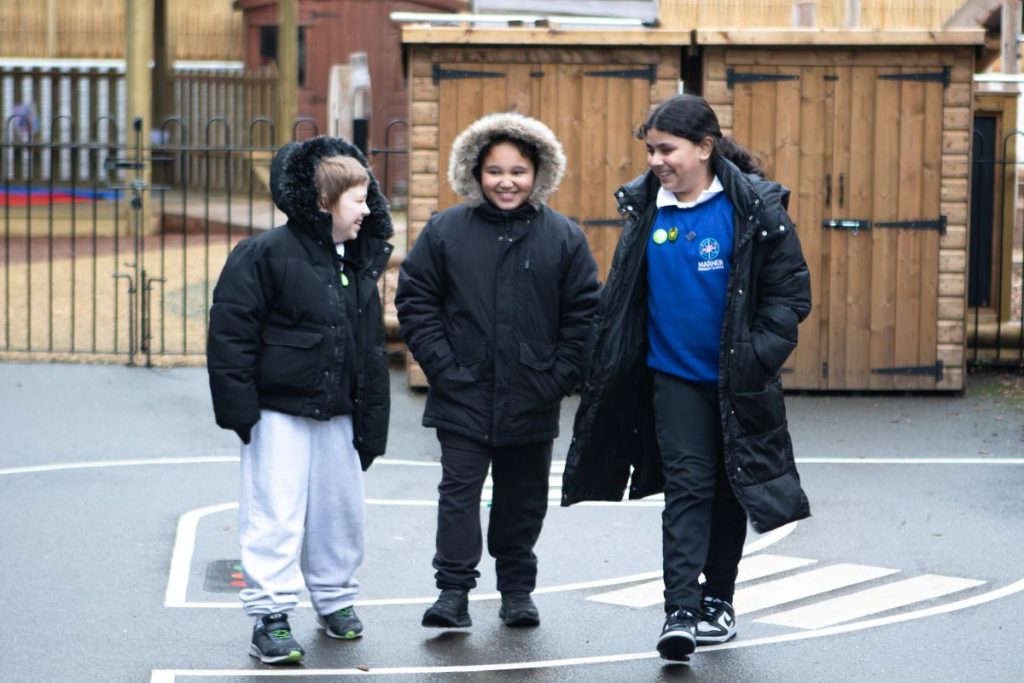
When a trial is up and running, this is when people take part in the council’s second consultation. The trial provides people with the opportunity to give their feedback to the local authority having experienced the scheme in operation.
Following this consultation, the local authority will re-evaluate traffic-mode data and consultation feedback and decide whether it will be made permanent or not.
Data is your friend
Regularly reviewing a School Street and monitoring it are essential to ensuring the scheme continues to benefit the school and surrounding area.
Using a mixed-method approach we gather and analyse both quantitative and qualitative data on how people travel to and from school and the impact of the School Street on local residents. We also look at automated traffic counts to assess vehicle and pedestrian flow. This helps us to better understand how successful a School Street is and what may need changing to improve the design.
Our review of 22 School Street schemes in the London Borough of Brent included collecting and analysing travel mode-share data. This revealed that since the schemes became operational, there has been an 8% increase in the proportion of pupils walking, wheeling or cycling their school journeys. At the same time, figures show a 6% decrease in travelling to school by car.
It’s time to think bigger than isolated School Streets
To really make a difference we not only need School Streets. We need quieter routes to the School Street as well. To have a broader impact, complementary measures such Bike Buses, Walking Buses and cycle and scooter parking are necessary. We need to make traveling more actively both fun and convenient.
In our work with Havering Council we have seen the hugely positive impact of Bike Buses and Walking Buses. The smiles on the children’s faces say all you need to know. It’s an organised and safe way to get to and from school. It’s sociable and the children love it.
To ensure the Bike Buses and Walking Buses become embedded in the area as an everyday occurrence, local support is essential. Camden Bike Bus is an excellent example of a Bike Bus that is thriving in London. Its continuing success is down to parental and community support.
Steps to a successful School Street
- Scoping locations for suitability
- Feasibility studies to assess likelihood of success
- In-depth engagement and consultation: includes drop-in workshops, school assemblies, surveys
- Continued two-way communications with residents while changes are being made and once the School Street is operational
- Launch the School Street: ensure residents and the school community understand why the School Street has been implemented and how the School Street will benefit them. Letter-drops, school newsletter and assemblies are all part of a successful launch.
- Annual monitoring and reviews of the School Street: includes traffic counts, air quality monitoring, surveys on how people are travelling to and from school
Having worked on School Street projects throughout the pipeline from scoping to implementation, the takeaway that sticks out the most is the importance of collaboration across all stages and listening to people’s concerns, as these can greatly influence the design of schemes.
Whilst there is a growing demand for School Street schemes as part of council transport strategies, our experience across feasibility, engagement, delivery and monitoring means we can support councils at any stage of the School Street journey to help support children to travel actively, breathe cleaner air and be safe while they arrive and leave school each day.
Contact us
If you would like support with delivering School Streets or behaviour change programmes for happier, healthier communities, we can help: info@mpsmartertravel.co.uk