
At MP Smarter Travel we are committed to working with local authorities to ensure towns and cities are welcoming places for everyone.
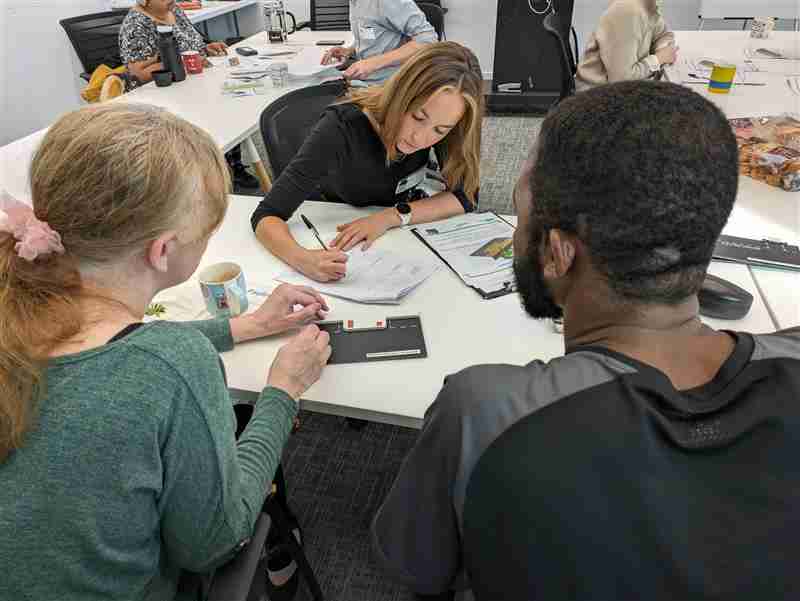
We facilitate Lambeth Council’s Accessibility Working Group. The group provides the council with insight into what it’s like to be a disabled person navigating existing infrastructure. Members review engagement documents on street changes and comment on good and bad aspects of proposed new street design.
The Accessibility Working Group makes a vital contribution to Lambeth Council’s engagement, ensuring everyone has the opportunity to shape the urban environment, so it works for them.
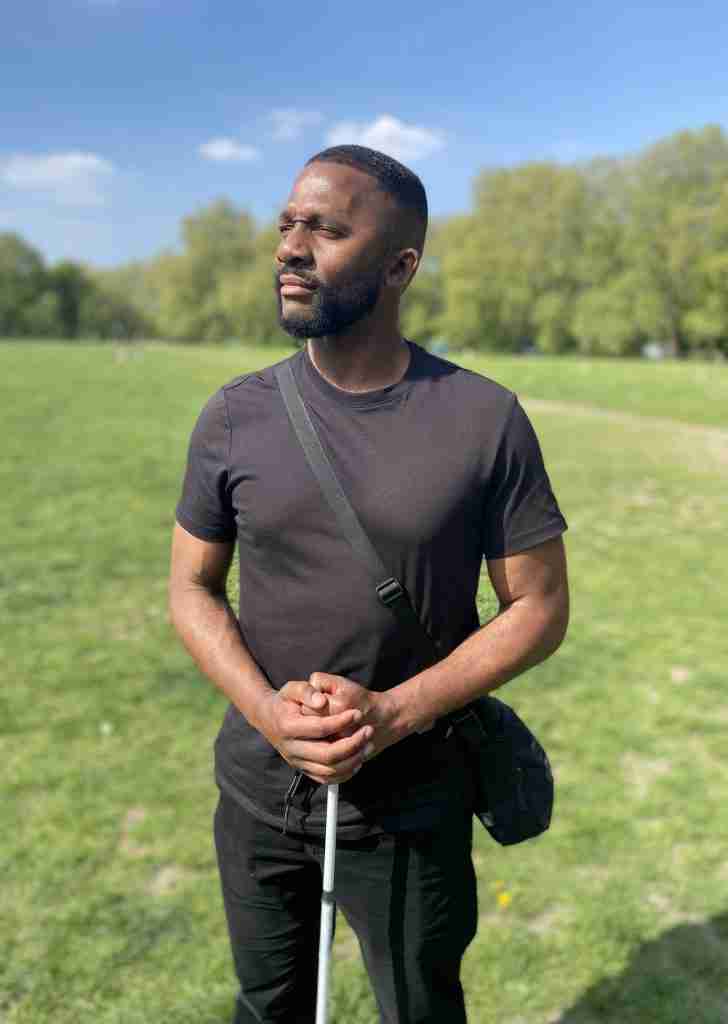
Andre Adom is a member of the Accessibility Working Group.
He joined after London’s oldest charity for visually impaired people, Blind Aid, recommended he check it out.
We welcome his contribution to the discussion around accessibility and inclusion, as he shares his experience with us.
Here’s what Andre says
Being able to take part in council consultations is important. It means that we can all put forward our views about council proposals so local councillors, transport planners and engineers are able to make better-informed policies and street designs.
We all feel good when we know we can exert some influence over shaping our surroundings and be part in the decision-making process that affects where we live.
If engagement is exclusive, you only get a narrow perspective. Making it inclusive is far richer. Nearly a quarter of the population in the UK is disabled. That’s over 16 million people. There are two million people registered as blind in the UK. So we’re talking big numbers of people who are often excluded or feel unable to take part in discussions about policies and decisions that affect them.
Getting around day-to-day
I’ve been visually impaired for over three years now. I know what it’s like to have full vision. But three years ago all that changed and I had to learn how to live with impaired sight. I can make out shadows and outlines of objects and people. And I can also make out some colour.
I’m Lambeth born and bred. I went to school here and have worked here so I know the place pretty well, including the street layout in many parts of the borough.
Day-to-day I use a cane to help me get around. I have also known the kindness of strangers on occasions when I’ve needed some help with navigating London’s busy pavements and stations. People see the cane and are mostly very helpful.
Creating a safe space to speak out
Disabled people can feel isolated and a little bit forgotten. Having the confidence to speak out is something not everyone has.
The beauty of the Accessibility Working Group is that it’s a safe space where you know that if you disagree with what the council is proposing or there’s a conflict in opinion with another group member, the conversation is always respectful.
We always have the overall objective in mind that we are working towards a street environment that will benefit all of us.
If streets are good for wheelchair users, visually impaired people, neurodivergent people and people with hearing impairments, they are going to be better places for everyone. That includes older people, children and families with pushchairs. After all, well designed streets with wide, level pavements, planting and clearly defined spaces for cycles, pedestrians and motor traffic offer all of us a better urban environment.
Overcoming obstacles and challenges on our streets
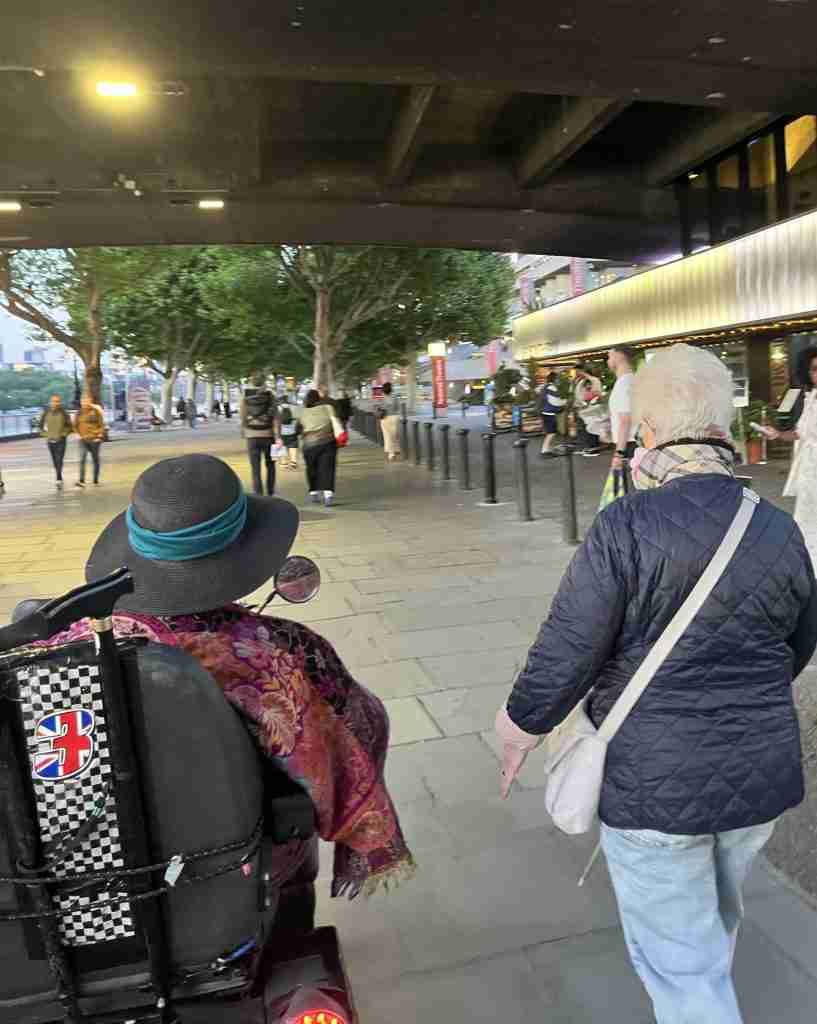
When you’re non-disabled, you don’t think twice about dodging out the way of a scooter, swerving a street sign that’s in the middle of the pavement or avoiding roadworks and slippery surfaces. But for some of us, this is a big deal and can be dangerous or have a negative impact on self-confidence and how some people may feel about going outside their front door.
We’re talking big numbers of people who are often excluded or feel unable to take part in discussions about policies and decisions that affect them.
It’s important to raise awareness of the challenges that society places on disabled people to overcome every single day.
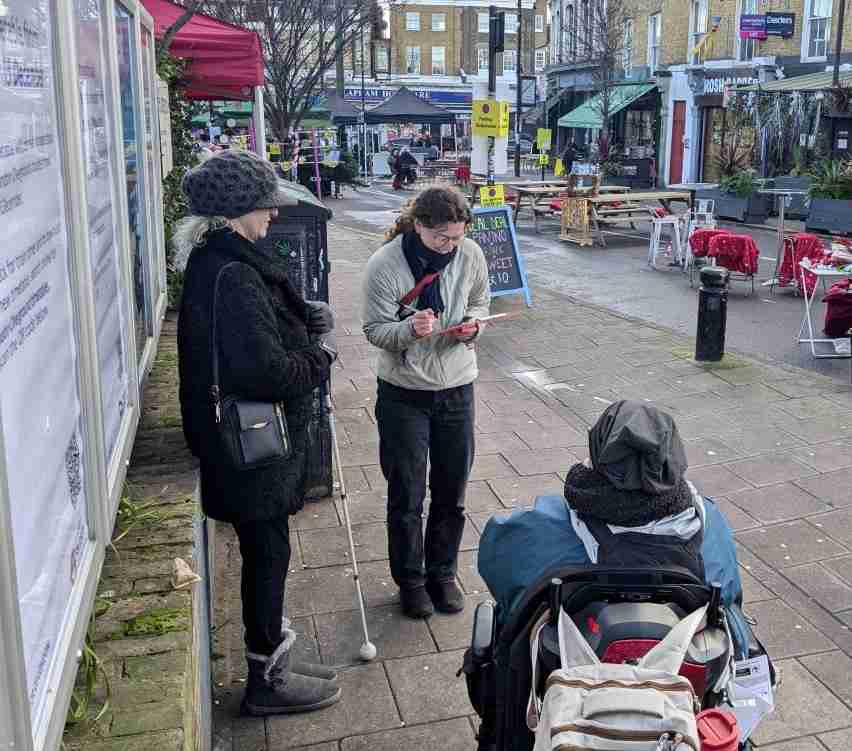
As part of the Accessibility Working Group, commenting on existing infrastructure involves going out to see a particular junction, parklet, cycle lane or crossing. We can say what works and what doesn’t so that future plans are improved and current infrastructure can be changed if funding is available.
High contrast levels vital to visually impaired people
If you’re visually impaired like me, I would say that contrast is so important. Lots of visually impaired people still have a tiny amount of vision.
I can distinguish between light and dark. For me, it’s not so much about the colour. As long as there is contrast, I find that helpful. So a wooden bench against grass works and signs with black text on a white background are the clearest for me and help me to understand what they are saying. Zebra crossings work well too as an alternative to traffic lights.
Also, tactile paving is vital because it lets you know that you’re at a crossing or close to a road.
Parklets and what they mean to me
Lambeth is installing parklets in locations across the borough as part of its Kerbside Strategy to prioritise people over cars. I love the parklets. They are great places where you can sit and be outside. When the Accessibility Working Group was asked to comment on them, I was able to make the point that access to the parklet needs to be spacious enough for a wheelchair user and for somebody using a cane.
Parklets are great because you can do so much with them. I would love to see information boards about the plants or something about the history of the place where the parklet is located. Brail panels would be a great addition. I’m not fluent in brail yet, so any information would need to be screen-reader friendly too.
Screen readers have their limitations
At the Accessibility Working Group, we have the opportunity to feed back on the appearance and content of written consultation documents.
For most people, the images are one of the most helpful parts of a consultation document. They help you see the council’s vision.
The screen reader that I have on my phone helps me by reading out text. But it can’t read pictures at all. The software I have on my laptop can give me a very basic description of an image, but only if there is a high level of contrast in the colours and tones used.
We can’t take it for granted that everyone with visual impairments has the technology that describes images to them. And even people who do have access to this technology, don’t all use the same product.
ALT text for online images is essential in helping me, and many other people like me, make sense of an image. This is the text that my screen reader reads to me to describe an image.
Working with innovators for a clearer picture
One of the most exciting things we’re doing is working with engineers at The Engineering & Design Institute (TEDI), London. One of the students, Nicholas Solly, is developing a range of 3D printed models of street infrastructure that will help disabled people, especially the visually impaired. Nicholas has created some prototypes and is still refining and developing new model types.
It is fantastic to be able to hold a model of a T-junction or a section of cycle infrastructure, a piece of street furniture or a physical representation of a textured surface.
It’s been incredible to talk to Nicholas about what could be done to improve the models to provide as accurate an impression as possible of the street infrastructure that is being proposed.
The 3D models help me construct a picture in my mind of the street infrastructure that the council is proposing.
Speaking up for other disabled people
I feel it’s incredibly important to be part of this group. Every local authority should have one. I know I’m making a difference. This is an opportunity for me to speak up for disabled people and hopefully make life a bit fairer. I feel that it’s my responsibility to speak up for others who are experiencing similar challenges to me.
On a personal level, being part of the group has given me the opportunity to learn about different issues concerning how councils make decisions and what they need to consider when designing streets and choosing materials.
I hadn’t paid much attention to this type of thing before. I’ve also met other disabled people with different life experiences. It’s interesting to hear what they have to say about our built environment and how it affects their lives.
Importance of continuing dialogue
The council keeps us updated on the work they have asked us to comment on. Aspects of some of their plans and infrastructure have been changed as a result of our contributions.
Knowing about the changes that come about as a result of listening to the Accessibility Working Group is very motivating. Communication is really important.
To be told that you are having an impact is very encouraging. It inspires me and others to keep engaged because we know we’re making a difference.