
Construction companies and developers must adopt zero pollution site transport
- Making our cities healthier and more liveable
- Switching from vans to cargo bikes
- Creating a cleaner construction industry
Mayors of two great UK cities, London and Manchester, continue to push for better air quality and lower carbon emissions. Their ambition to follow the lead of many European mayors to make cities healthier and more liveable is driven by necessity as much as by a vision.
Cargo bikes are playing a major part in improving city air quality.

I’m Ronan Cullen from the MP Smarter Travel team. I have worked in the construction and sustainability sectors and see the huge potential for cargo bikes in the construction sector.
In the right place, they are an amazingly efficient and emission-free mode of transport.
For those of us who live and work in towns and cities, the quality of the air we breathe is inseparable from the quality of life itself.
Political leaders like those mayors driving up our air quality through the policies they introduce, recognise that reducing traffic emissions is vital for the health of everyone living and working in these busy, vibrant places.
I’m convinced that switching from vans to cargo bikes for the numerous small deliveries to and from site could be one of the most important steps that construction companies can take to dramatically reduce traffic emissions that the industry generates.
Policies that impact on how we live and work are not always popular with everyone at first. Just think of the media coverage and social media outrage that followed ULEZ when the Mayor of London first launched it.
Over time, the benefits of ULEZ have become evident in air pollution data, demonstrating that air quality in London is improving.
Black cabs going green leave white vans as the main polluters
Clean Cities research shows that, in London, as the iconic black cabs go green, diesel vans are now the main cause of air pollution.
Construction sites generate huge amounts of local vehicle movement as the various trades and suppliers shuttle materials and tools between where contractors store their supplies and the building sites they are developing.
Often, vans are deemed to be a core element of many industries for the movement of people and materials. Construction and associated trades, deliveries, logistics and catering are examples of sectors that use vans extensively.
ONS data shows that in 2023, “construction’s carbon-based fuel usage increased by 1.6% on the year and by just over one quarter on 1993” [BCIS (Building Cost Information Centre)].
Looking at long-term trends, DERV (Diesel Engine Road Vehicle, referring to the white or road diesel used in transport) and gas oil are consistently the sector’s most used carbon-based fuels. This likely owes to the transportation of resources and personnel during construction projects.
BCIS website
Mobility and agility in urban environments
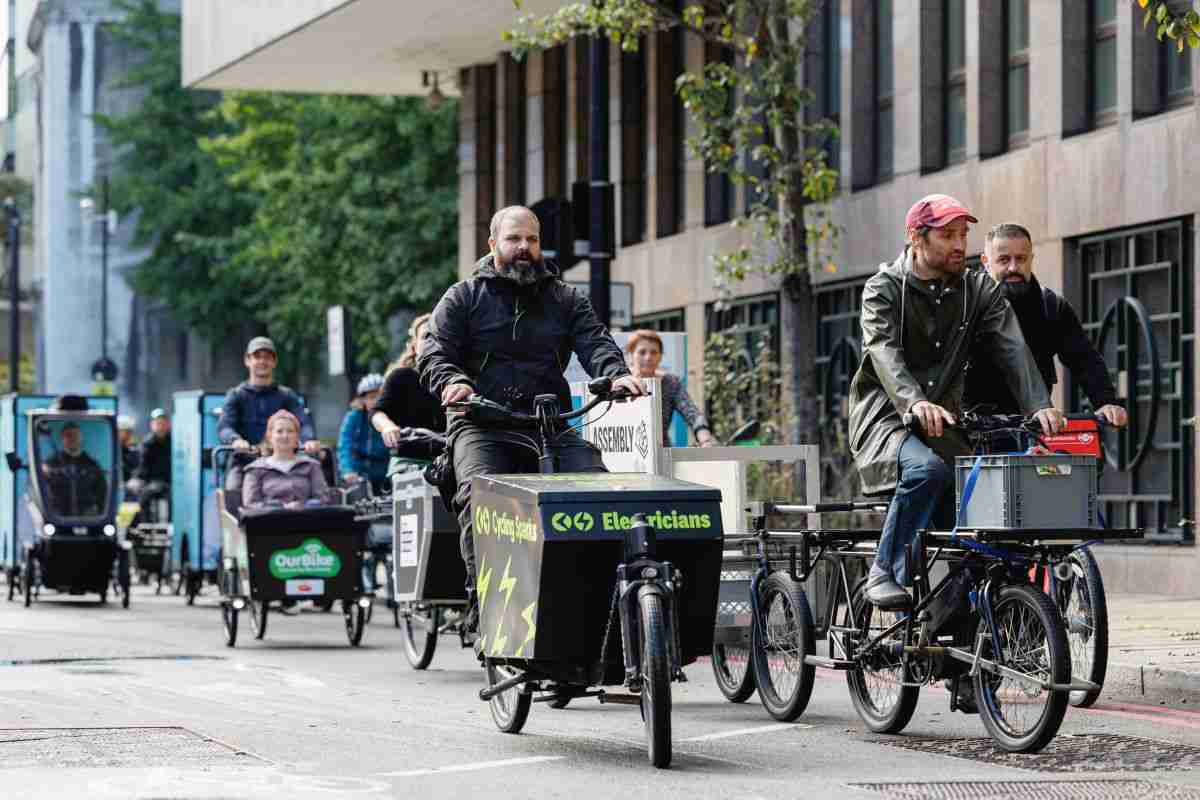
Whilst working at MP Smarter Travel, I have been exposed to the extent of how impactful cargo bikes can be, with companies such as Pedal Me (courier), Cycling Sparks (electrician), Under One Sky (homeless charity) and En Route (cafe) offering an alternative and sustainable way to do business.
Beyond their environmental and safety benefits, cargo bikes are practical and efficient. They offer greater mobility in congested urban environments, avoid parking and congestion charges, and reduce the stress and cost of daily travel.

For the construction sector, cargo bikes are the logical solution for smaller loads in towns and cities. They are cleaner, cheaper, safer and more agile than the diesel van. They are ideal for electricians, plumbers and other trades that need to move smaller tools and materials around city sites quickly and easily.
The challenge now is to make their use the norm rather than the exception.
Transporting with ease at low cost
On tight urban plots, where storage is limited, every forgotten box of fittings or bag of sand often means another van journey through congested city streets. I have seen how much diesel traffic these short, frequent trips generate. Each movement adds to congestion, increases safety risks, and contributes to the city’s air pollution.
Cargo bikes offer a practical, zero-emission alternative. They are particularly well-suited to transporting smaller materials such as boxes of screws, fittings, electrical components, copper piping, or roofing supplies. They can navigate city streets quickly and safely, avoid parking difficulties and eliminate both fuel costs and emissions.
Companies proving cargo bikes work in practice
Developers and contractors are under growing pressure to demonstrate low-carbon performance, both to satisfy planning conditions and to meet their own environmental commitments. Switching from diesel vans to electric cargo bikes can make a measurable difference.
Building supplies retailer, ScrewFix, has already teamed up with bike courier company Gophr to deliver thousands of building products a week to its customers.
UK-based infrastructure services company, FM Conway, is proving cargo bikes work in practice. They are using e-cargo bikes to transport construction materials around London.
Each of FM Conway’s custom-built bikes can carry up to 250 kilograms of materials and fittings. The bikes are fitted with electric pedal assist motors and GPS tracking, allowing efficient management of logistics across multiple sites.
This project forms part of FM Conway’s broader goal to become carbon neutral by 2045, five years ahead of the UK government’s national target. Senior Contract Manager Adam Barnes described his initial hesitation about using the bikes. This was quickly replaced by enthusiasm once he experienced their ease of use and potential.
Cleaner, safer places to live and work
Maintaining safety for those working on sites and for the general public moving around sites, is critical. Every movement around and in and out of building sites creates risks to people’s safety.
The main contractor and developers on projects have a major role to play in insisting all trades comply with their rules and regulations. Stipulating cargo bikes as the go-to form of transport for moving smaller loads should be a key part of how contractors can make a significant difference to their carbon footprint and to the environment everyone on and around the site experiences.
Planning authorities could make cargo bikes part of permission process
Developers, contractors and local authorities must work together to integrate cargo bikes into site planning and supply chain operations. By doing so, they can reduce emissions, improve safety and strengthen their environmental credentials.
Transport for London advocated for cargo bike use on massive infrastructure projects such as Tideway, Crossrail and HS2 in their drive make London zero carbon by 2030.
Opportunity to lead by example
In the end, this is not just about meeting targets or ticking sustainability boxes. It is about taking responsibility for the impact the construction sector has on the cities it builds in and the people who live in them.
The construction sector has the opportunity to lead by example and show that cleaner, smarter logistics are not just possible, but essential to building a better future.
Read more about our freight and logistics work.